How to Plan a Commercial Gym Layout (Space Design Guide)
June 23, 2026
A successful gym is not determined only by the quality of its equipment. The layout of the facility plays an equally important role in member satisfaction, operational efficiency, safety, and long-term profitability.
Even the most advanced fitness equipment can fail to deliver a great user experience if the gym layout is poorly designed. Overcrowded areas, inefficient traffic flow, and improper equipment placement often lead to member dissatisfaction and reduced retention rates.
This guide explains how to plan a commercial gym layout that maximizes space utilization, improves training experiences, and supports future business growth.
1. Start With Your Target Market
Before selecting equipment or drawing floor plans, it is essential to identify who will use the facility.
Different gym types require different layouts:
- Commercial fitness clubs
- Boutique fitness studios
- Hotel gyms
- Corporate fitness centers
- University fitness facilities
- Rehabilitation and wellness centers
For example, a university gym may require larger free-weight and functional training areas, while a hotel gym may prioritize cardio equipment and space efficiency.
Understanding your target users should always be the first step in gym planning.
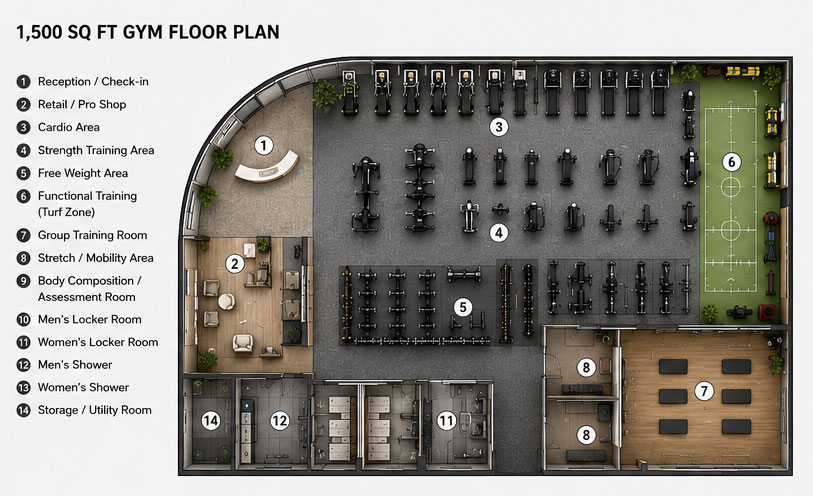
2. Divide the Gym Into Functional Training Zones
One of the biggest mistakes gym owners make is placing equipment without a clear zoning strategy.
A professional commercial gym should generally include:
Cardio Zone
Used for:
- Treadmills
- Ellipticals
- Exercise bikes
- Rowing machines
- Stair climbers
Recommended allocation:
25%–35% of total space
Cardio equipment is often positioned near windows to create a more enjoyable exercise environment.
Strength Machine Zone
This area includes:
- Chest press machines
- Shoulder press machines
- Lat pulldown machines
- Leg machines
- Selectorized strength equipment
Recommended allocation:
25%–35% of total space
Machines should be grouped according to muscle groups to improve workout efficiency.
Free Weight Zone
Typically includes:
- Dumbbells
- Barbells
- Benches
- Squat racks
- Power racks
Recommended allocation:
20%–30% of total space
This area should have reinforced flooring and adequate safety clearance.
Functional Training Zone
Modern gyms increasingly dedicate space to:
- Functional rigs
- Kettlebells
- Battle ropes
- TRX systems
- Plyometric boxes
Recommended allocation:
10%–20% of total space
Functional training remains one of the fastest-growing fitness categories worldwide.
3. Design Efficient Traffic Flow
Member movement throughout the facility should feel natural and intuitive.
Poor traffic flow often causes:
- Congestion
- Equipment bottlenecks
- Safety risks
- User frustration
A well-designed layout should allow members to move smoothly between:
- Reception
- Locker rooms
- Cardio areas
- Strength zones
- Functional training spaces
Avoid placing large equipment directly in major walking pathways.
4. Leave Adequate Space Between Machines
Many new gym owners attempt to maximize equipment quantity by reducing spacing.
This approach often creates:
- Safety concerns
- Poor workout experiences
- Difficult equipment access
- Maintenance challenges
General spacing recommendations:
- Cardio machines: 60–100 cm between units
- Strength machines: 80–120 cm clearance
- Free-weight areas: larger safety zones
Comfortable spacing improves both safety and perceived facility quality.
5. Prioritize Visibility and Openness
Modern fitness facilities increasingly favor open layouts.
Benefits include:
- Better supervision
- Improved member comfort
- Stronger community atmosphere
- Enhanced visual appeal
Avoid excessive partitions that make spaces feel cramped or disconnected.
Members often prefer facilities that feel spacious and inviting.
6. Consider Electrical and Utility Requirements
Layout planning should account for infrastructure needs.
Cardio equipment may require:
- Electrical outlets
- Internet connections
- Entertainment systems
Other considerations include:
- Air conditioning
- Ventilation
- Lighting
- Emergency exits
Utility planning should be completed before equipment installation.
7. Plan Flooring Based on Equipment Type
Different training zones require different flooring materials.
Cardio Areas
Typically use:
- Rubber flooring
-
Shock-absorbing surfaces
Strength Areas
Require:
- Heavy-duty rubber flooring
- Impact protection
Functional Training Areas
Often use:
- Multi-purpose athletic flooring
Proper flooring extends equipment life and protects facility infrastructure.
8. Design for Peak Hour Capacity
Many gyms are designed based on average attendance rather than peak demand.
This creates problems during busy periods.
When planning, consider:
- Maximum member capacity
- Peak-hour traffic
- Popular equipment demand
- Group training schedules
The goal is to minimize waiting times and maximize member satisfaction.
9. Leave Room for Future Expansion
Successful gyms often grow faster than expected.
Leaving 10–15% of floor space available for future equipment additions provides flexibility.
Future expansion may include:
- Additional cardio equipment
- New strength machines
- Recovery zones
- Group training areas
Long-term planning helps avoid expensive renovations.
10. Work With Professional Gym Designers
Professional gym equipment manufacturers often provide:
- 2D layout drawings
- 3D gym designs
- Equipment recommendations
- Capacity planning
- Budget optimization
Professional planning helps avoid costly design mistakes and improves overall project success.
Conclusion
A well-designed gym layout directly affects member experience, operational efficiency, safety, and profitability.
The most successful facilities balance equipment selection, traffic flow, zoning, spacing, and future scalability.
By carefully planning your gym layout before purchasing equipment, you can maximize every square meter and create a fitness environment that attracts and retains members for years to come.
FAQ
1. What is the most important part of gym layout planning?
Defining training zones and understanding user needs.
2. How much space should be allocated to cardio equipment?
Typically 25%–35% of the total gym area.
3. Why is traffic flow important?
It improves safety, comfort, and operational efficiency.
4. Should gyms leave space for future expansion?
Yes, 10–15% reserve space is highly recommended.