How Chinese Gym Equipment Manufacturers Control Product Quality
October 10, 2026
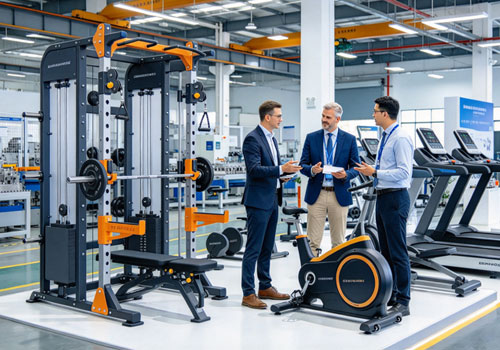
When purchasing commercial gym equipment from China, product quality is one of the most important factors for gym owners, distributors, and fitness project contractors. Equipment must withstand frequent use, provide reliable performance, and meet the requirements of different commercial environments.
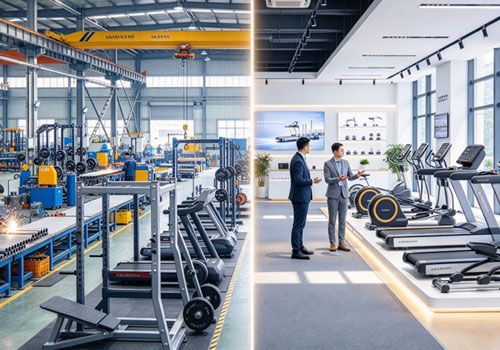
A professional gym equipment manufacturer does not rely on a single final inspection to ensure quality. Instead, quality control should cover the entire production process, from raw material selection to manufacturing, assembly, testing, packaging, and delivery.
Understanding how Chinese gym equipment manufacturers control product quality can help international buyers evaluate suppliers, reduce purchasing risks, and make more informed sourcing decisions.
1. Raw Material Inspection
Product quality begins with the materials used in manufacturing. For commercial fitness equipment, the quality of steel, cables, bearings, upholstery, electronic components, and other parts directly affects durability and performance.
Before production, manufacturers should verify that incoming materials meet the required specifications.
Important inspection points include:
- Steel and metal components: Check dimensions, thickness, surface condition, and material specifications.
- Cables and pulleys: Evaluate construction, dimensions, movement, and suitability for the intended load.
- Bearings and moving parts: Check component quality and ensure smooth operation.
- Upholstery and padding: Assess material quality, stitching, comfort, and wear resistance.
- Electronic components: Verify specifications and compatibility with the equipment.
Consistent material inspection helps prevent defects from entering the production process. Buyers should ask manufacturers about their material requirements and how incoming components are inspected.
2. Manufacturing Process Control
Even when high-quality materials are used, poor manufacturing practices can affect the finished product. Professional manufacturers establish procedures to control important production stages.
For strength equipment, this may include cutting, bending, welding, grinding, and frame assembly. For cardio equipment, production may also involve mechanical assembly, electrical connections, and control-system installation.
Key production checks include:
- Confirming that components match approved drawings and dimensions.
- Inspecting weld quality and frame alignment.
- Checking drilled holes, mounting points, and connection positions.
- Ensuring moving parts are installed correctly.
- Monitoring surface preparation and coating quality.
- Identifying and correcting defects before equipment moves to the next stage.
Standardized production procedures help manufacturers maintain consistency across different units and repeat orders. This is particularly important for distributors and large gym projects that require multiple pieces of the same model.
3. Welding, Frame Strength, and Structural Safety
The frame is a critical part of many commercial gym machines, including power racks, Smith machines, cable crossover systems, benches, and selectorized strength equipment.
Poor welding, inaccurate dimensions, or unsuitable structural design can affect stability and long-term reliability.
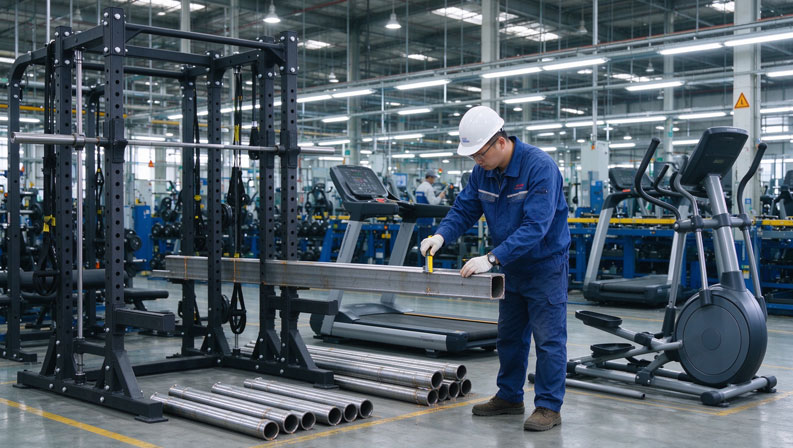
Manufacturers should inspect weld appearance and consistency, frame alignment, connection points, and the accuracy of assembled structures. Where appropriate, additional structural or load testing can help verify that equipment performs according to its design requirements.
Buyers should not evaluate frame quality by appearance alone. Ask for technical specifications, material information, applicable test documentation, and details about how structural quality is verified.
4. Assembly and Functional Testing
After individual components are manufactured, equipment must be assembled correctly. Incorrect installation or poorly adjusted parts can lead to noise, unstable movement, or premature wear.
During assembly and functional testing, manufacturers may check:
- Whether bolts, fasteners, and connections are properly secured.
- Whether adjustment mechanisms work correctly.
- Whether cables move smoothly through pulleys.
- Whether weight stacks travel properly without unnecessary friction.
- Whether benches, racks, and frames remain stable during intended use.
- Whether treadmill belts, motors, displays, and control functions operate correctly.
Testing procedures should reflect the type of equipment being produced. A treadmill requires different functional checks from a dumbbell rack or a plate-loaded strength machine.
For buyers ordering multiple units, consistent testing standards are important because every piece of equipment should meet the same approved requirements.
5. Quality Control for Different Equipment Categories
Different gym equipment categories have different quality risks. A reliable manufacturer adapts inspection procedures to the product rather than applying the same checklist to every item.
| Equipment category | Important quality checks |
| Cardio equipment | Motor and control functions, belt movement, display operation, electrical safety, and stability |
| Strength machines | Frame construction, cable movement, pulley alignment, adjustment mechanisms, and weight-stack operation |
| Racks and benches | Structural stability, weld quality, connection points, dimensions, and load-related requirements |
| Free weights | Weight consistency, surface finish, grip quality, and dimensional accuracy |
| Functional training equipment | Frame stability, attachment security, cable movement, and accessory compatibility |
The exact testing requirements depend on the product design, applicable standards, and intended market. Buyers should confirm which checks are performed on the specific models included in their order.
6. Surface Treatment and Finish Inspection
Surface treatment affects both appearance and durability. Commercial gym equipment may be exposed to frequent contact, sweat, cleaning products, and repeated use.
Depending on the product, manufacturers may use powder coating, plating, painting, or other finishing processes.
Quality checks may cover:
- Coating consistency and color accuracy.
- Surface scratches, dents, bubbles, or other visible defects.
- Adhesion and resistance to normal wear.
- Rust prevention and protection of exposed metal.
- Upholstery seams and finishing details.
For customized orders, buyers should approve the required colors, materials, logos, and finishing details before mass production. A confirmed sample or written specification can reduce the risk of differences between the approved design and delivered products.
7. Final Product Inspection Before Packaging
Final inspection helps identify problems that may have been missed during earlier production stages. Before packaging, manufacturers should verify that finished equipment matches the purchase order and approved specifications.
A final inspection may include:
- Model and quantity verification.
- Visual inspection of the frame, coating, upholstery, and accessories.
- Functional testing of relevant moving or electrical components.
- Checking dimensions and key specifications.
- Confirming labels, instructions, and included accessories.
- Recording defects and ensuring corrective action is completed.
For large commercial gym projects, inspection is particularly important because a defect affecting several units can delay installation or increase replacement costs.
Buyers can request inspection records, product photos, or videos before shipment. For high-value orders, an independent third-party inspection may also be appropriate.
8. Packaging and Protection During Transportation
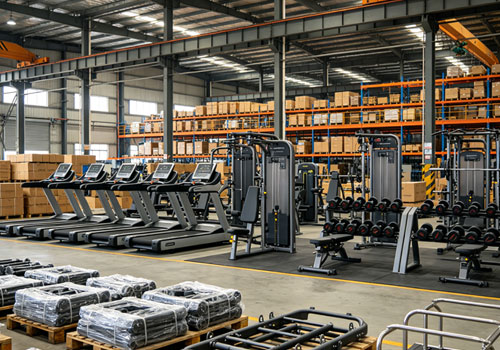
Quality control should not end when manufacturing is complete. Commercial gym equipment often travels long distances by sea or land, and poor packaging can result in scratches, damaged components, or missing accessories.
Manufacturers should select packaging according to the equipment's size, weight, structure, and transportation requirements.
Appropriate measures may include protective wrapping, foam or other cushioning, reinforced cartons, wooden protection where necessary, and secure loading procedures. Small accessories and installation hardware should be packed and labeled carefully to reduce the risk of loss.
Before shipment, buyers should confirm the packaging method, carton or package markings, quantity, and any special handling requirements. Clear packaging arrangements help protect equipment and simplify receiving and installation.
9. Documentation, Traceability, and Continuous Improvement
A structured quality management process should create records that help manufacturers identify problems and improve production consistency.
Depending on the factory and product, relevant documentation may include material inspection records, production inspection checklists, functional test results, final inspection reports, and corrective-action records.
Traceability is especially useful when a problem appears after delivery. If the manufacturer can identify the affected model, production batch, or component, it may be easier to investigate the cause and arrange a suitable solution.
Buyers should also distinguish between a manufacturer's general quality management certification and product-specific compliance. For example, ISO 9001 relates to a quality management system; it does not automatically mean every piece of equipment has been independently tested or certified to every applicable product standard.
When requesting CE-related documents, RoHS information, or third-party test reports, confirm that the documents apply to the actual products being purchased and meet the requirements of the destination market.
10. How Buyers Can Evaluate a Manufacturer's Quality Control
International buyers do not need to manage the factory's production process themselves, but they should verify that the supplier has a clear and credible quality control system.
Before placing an order, consider the following steps:
- Request detailed specifications. Confirm materials, dimensions, capacities, components, and finish requirements.
- Ask about inspection procedures. Find out how materials, production stages, and finished products are checked.
- Review relevant documentation. Request applicable certificates, test reports, and inspection records.
- Approve samples or reference specifications. Use them to clarify quality expectations before mass production.
- Confirm the pre-shipment inspection plan. Agree on what will be checked and how defects will be handled.
- Consider a factory visit or video inspection. This can help you understand production facilities and quality management practices.
- Put requirements in writing. Include specifications, approved samples, packaging requirements, and agreed corrective-action procedures in the order documentation.
For large orders, it is especially important to establish quality requirements before production begins. Resolving misunderstandings after equipment has been manufactured can be more costly and time-consuming.
Why Choose Hix Fitness?
Hix Fitness is a commercial gym equipment manufacturer based in Guangzhou, China, serving international B2B customers and fitness projects.
Our product range covers commercial cardio equipment, strength machines, racks, benches, free weights, and functional training equipment. We also support complete gym projects through equipment selection, OEM/ODM customization, logo and color options, and 2D/3D gym layout planning.
For distributors, gym owners, and project buyers, clear communication about product specifications, production requirements, inspection, packaging, and after-sales support is essential. Working directly with a manufacturer can make it easier to discuss these requirements and coordinate equipment for a project.
When evaluating Hix Fitness or any other supplier, buyers should confirm the specifications, applicable documentation, inspection arrangements, delivery schedule, and warranty terms for their particular order.
Conclusion
Chinese gym equipment manufacturers can control product quality through a systematic process that covers incoming materials, manufacturing, welding, assembly, functional testing, surface finishing, final inspection, and export packaging.
However, quality management practices can vary between factories. Buyers should not assume that every supplier follows the same procedures simply because it manufactures gym equipment in China.
By checking technical specifications, asking about quality control, reviewing relevant documentation, and confirming inspection requirements before shipment, international buyers can reduce purchasing risks and make more confident decisions.
Whether you are equipping a commercial gym, supplying fitness equipment to local markets, or managing a large fitness project, choosing a manufacturer with transparent quality control practices helps support equipment reliability and long-term business relationships.
FAQ
1. How do Chinese gym equipment manufacturers control product quality?
They may use incoming material inspections, production checks, assembly testing, final inspections, and protective packaging. Specific procedures vary by manufacturer and product.
2. What should I check before buying commercial gym equipment from China?
Review specifications, material quality, applicable certifications or test reports, warranty terms, and the supplier's inspection procedures.
3. Can I inspect gym equipment before shipment?
Yes. You can request photos, videos, inspection records, a factory inspection, or an independent third-party inspection, depending on the order.
4. Does ISO 9001 guarantee gym equipment quality?
No. It indicates a quality management system, not automatic certification of every product. Product specifications and relevant test evidence should also be checked.
5. Why is pre-shipment inspection important?
It helps identify specification mismatches, visible defects, missing accessories, and other problems before equipment leaves the factory.